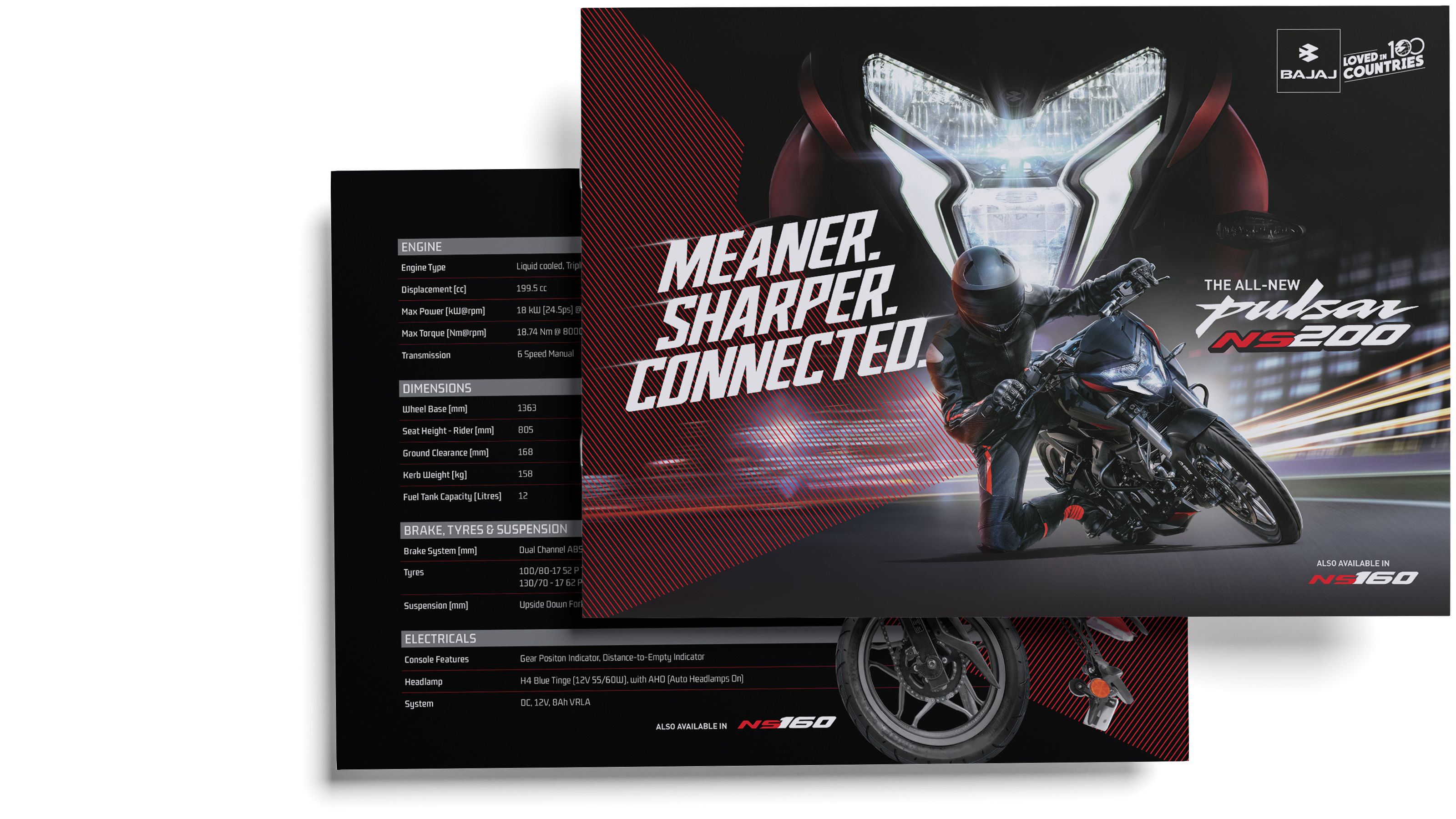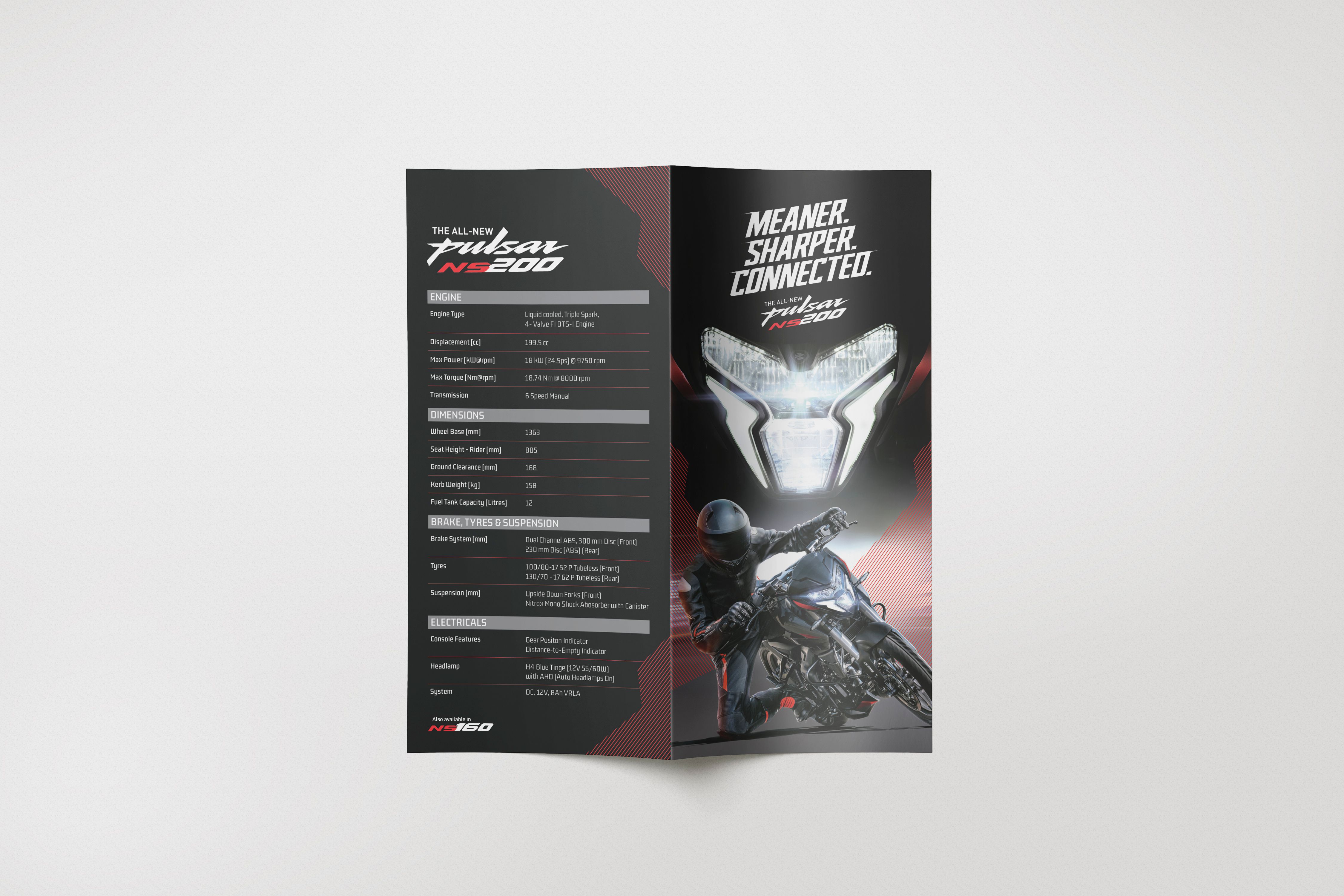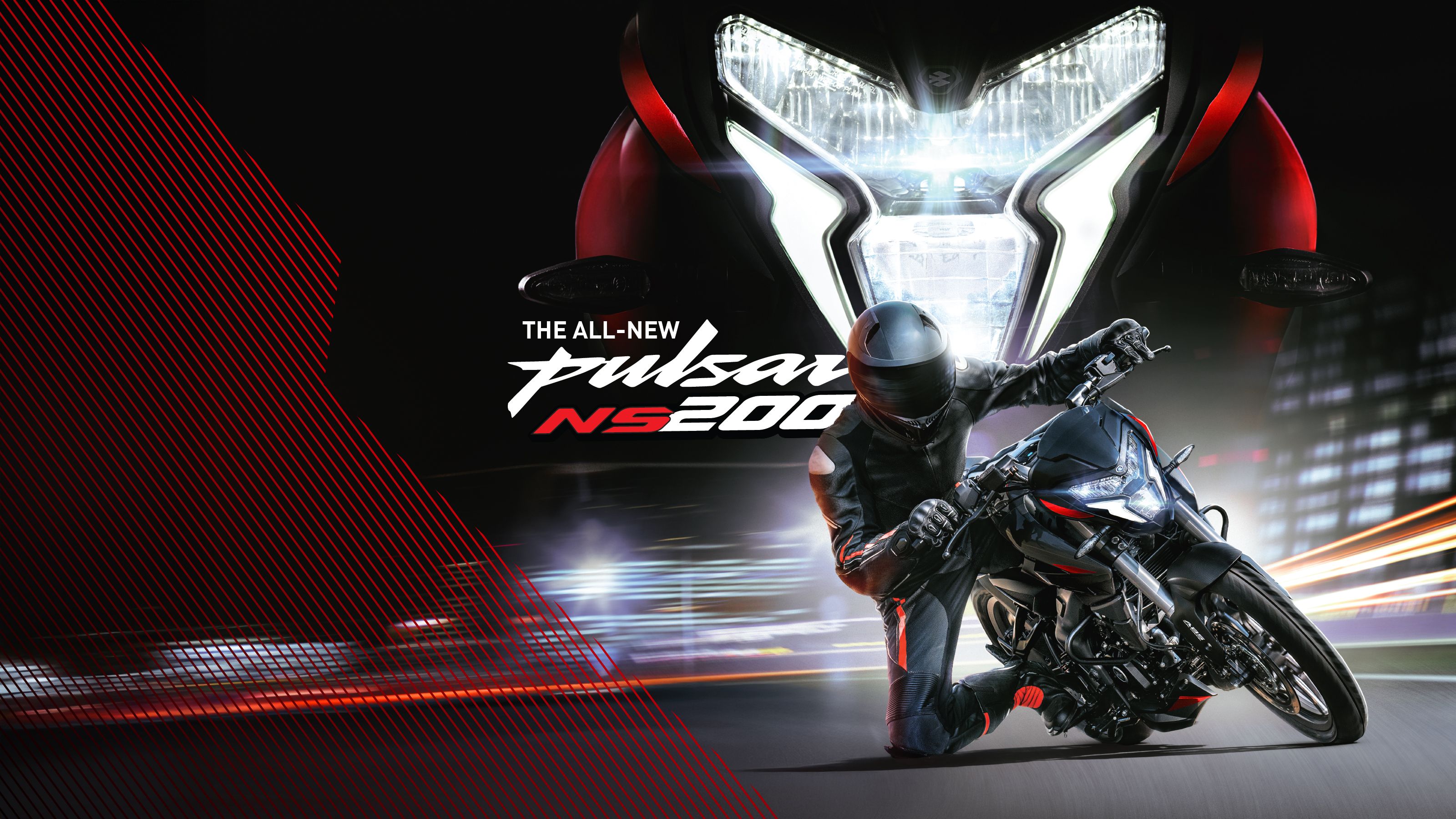
Designing the global design language behind Bajaj Pulsar NS200.
Dreamjar for Bajaj Pulsar NS200 + NS160

Designing the global design language behind Bajaj's Pulsar NS200+NS160.

About

Bajaj Auto is one of India’s most established automotive manufacturers, with a presence in more than one hundred countries. Pulsar has been one of its most recognisable motorcycle lines for years, shaping how riders think about performance and everyday riding across diverse markets.


Visual CommunicationCampaign

Detailed Scope

Master Visual Language
Design System Framework
Visual Identity Expansion
POSM and Dealership Collateral
Event and Retail Display
Master Artworks

Challenge

The Pulsar NS200 and NS160 needed a refreshed visual direction that could work across very different markets. Performance means different things in different regions, and the existing visual approach wasn’t deep enough for what different regions expected from the bike. The Pulsar lineup had also expanded, which blurred distinctions between variants. Bajaj needed a more accommodating-yet-aspirational visual presence without losing what riders already associated with the brand.

Solution

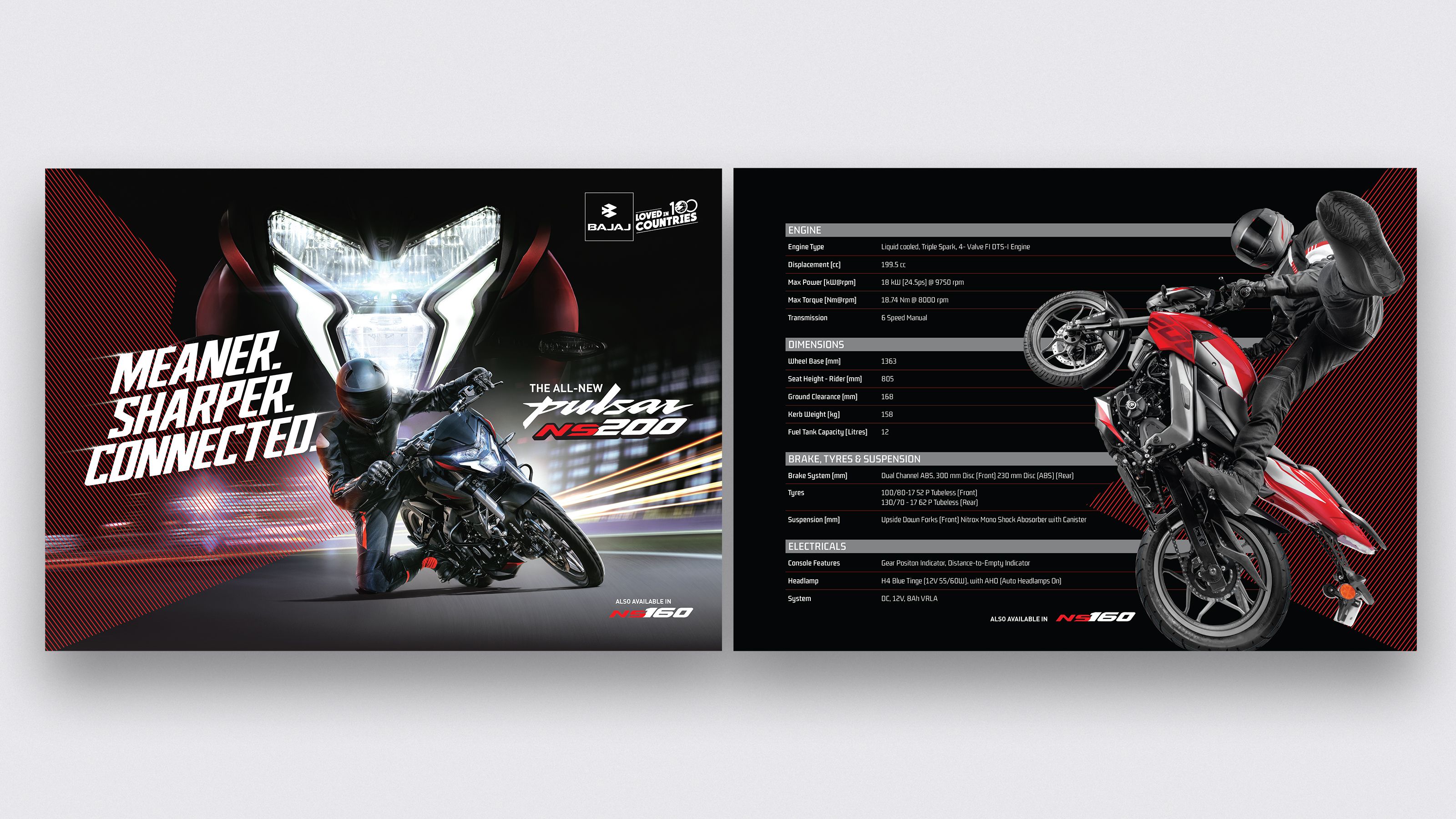
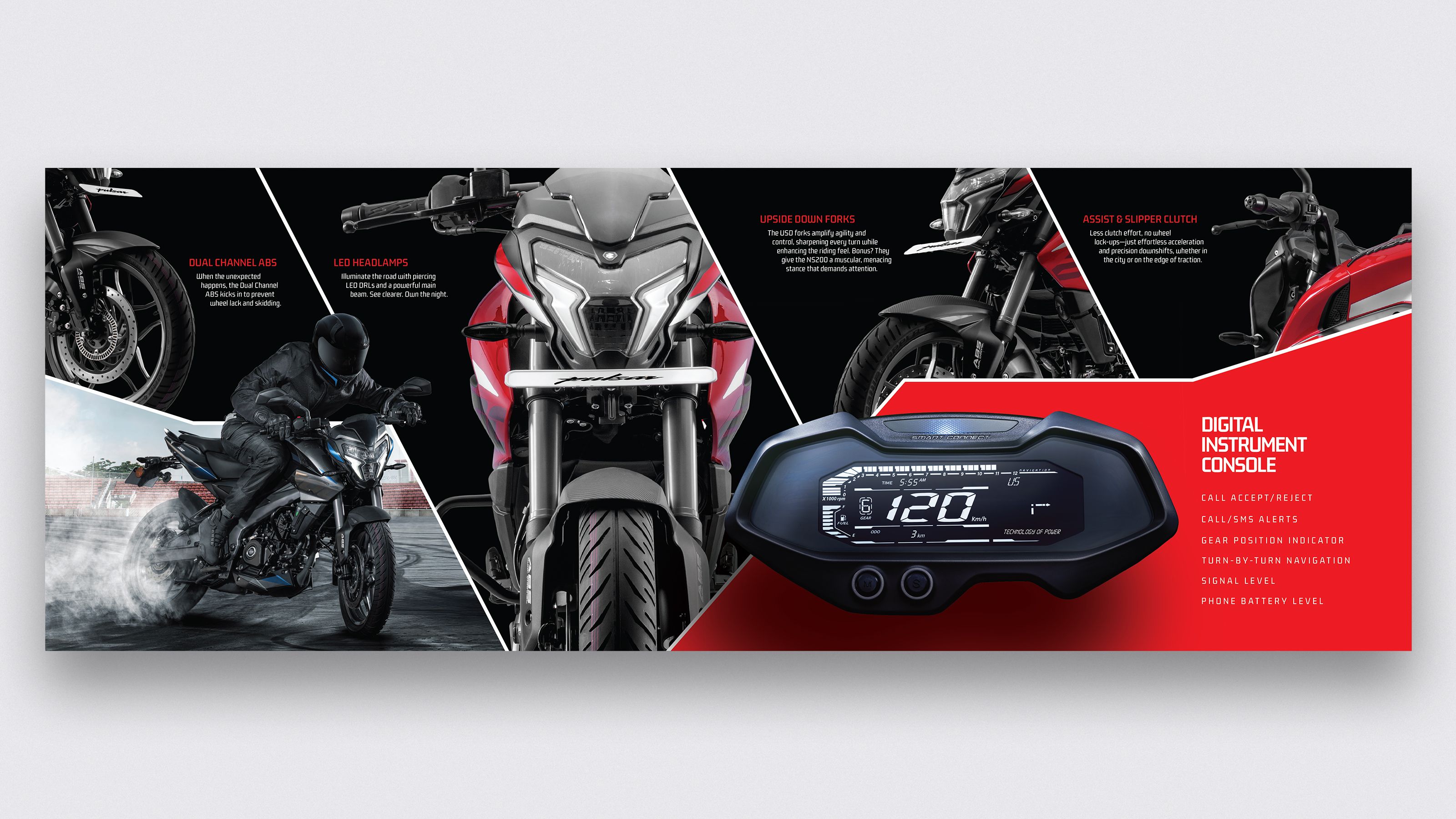
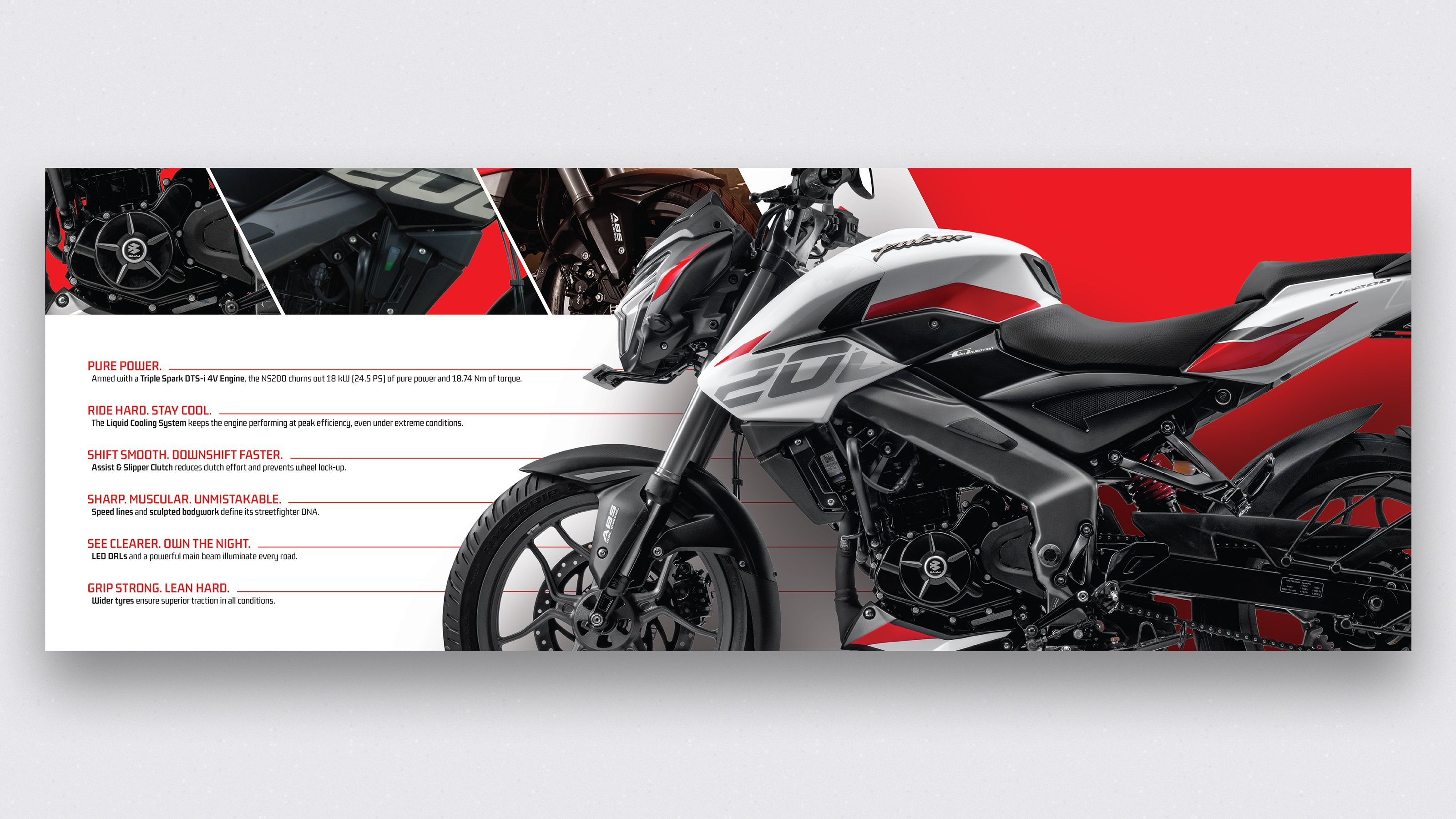
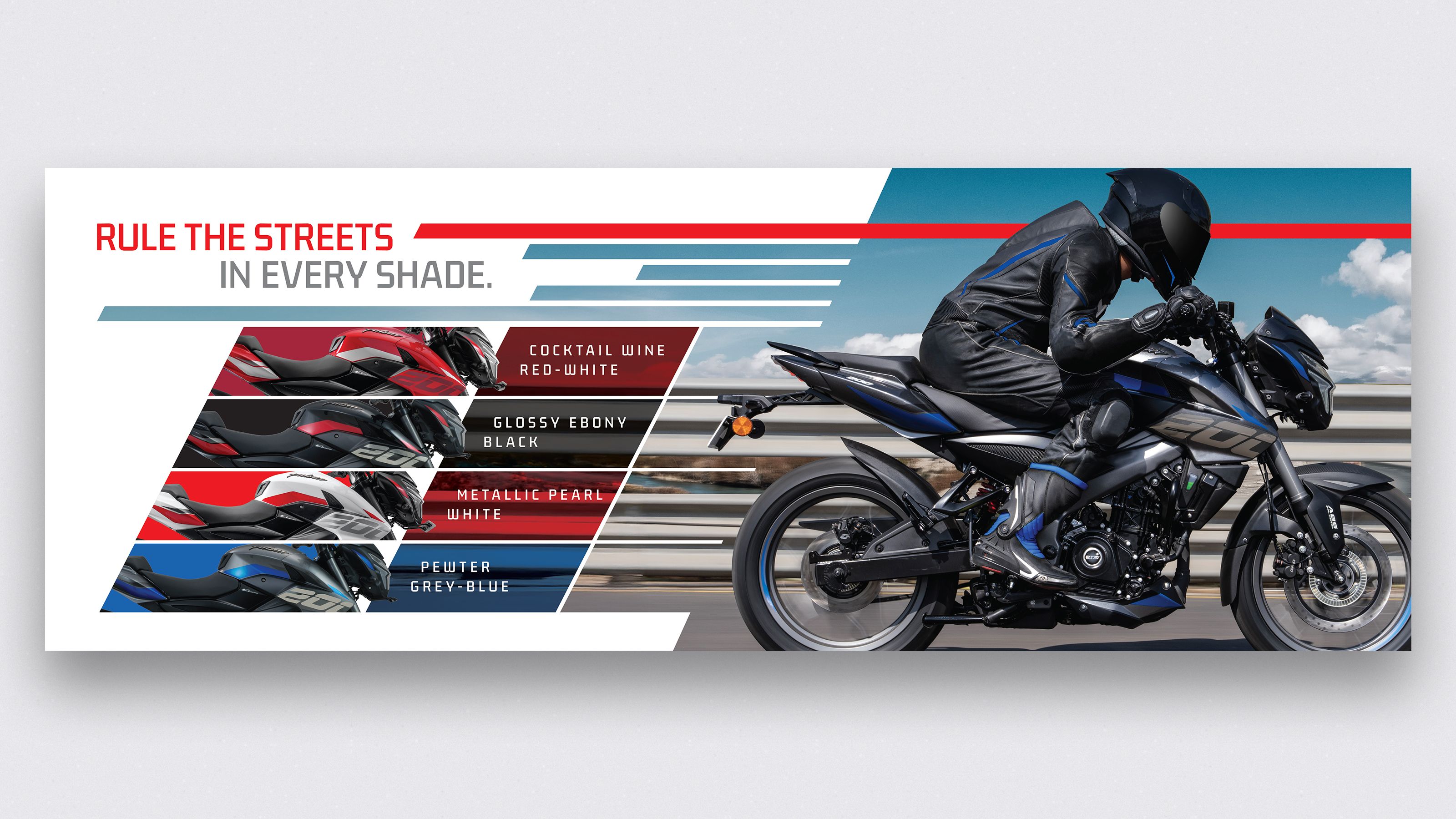
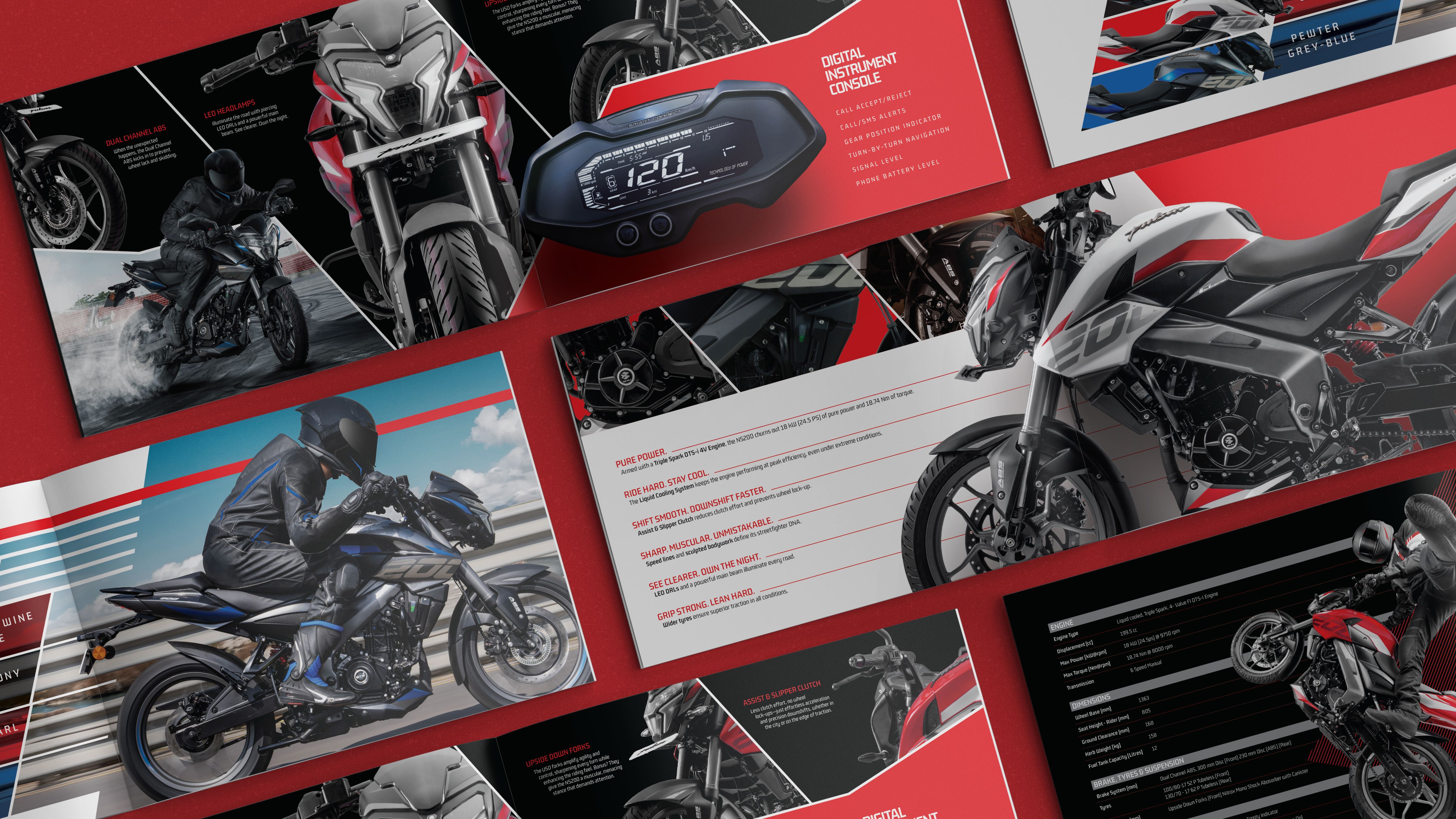
Dreamjar developed the master visual language for the Pulsar NS200 and NS160, built to adapt across cultures, languages, and market behaviours. We created a performance-led visual foundation for worldwide rollout and future variant separation, giving global teams a system they could localise confidently without losing the core intent.
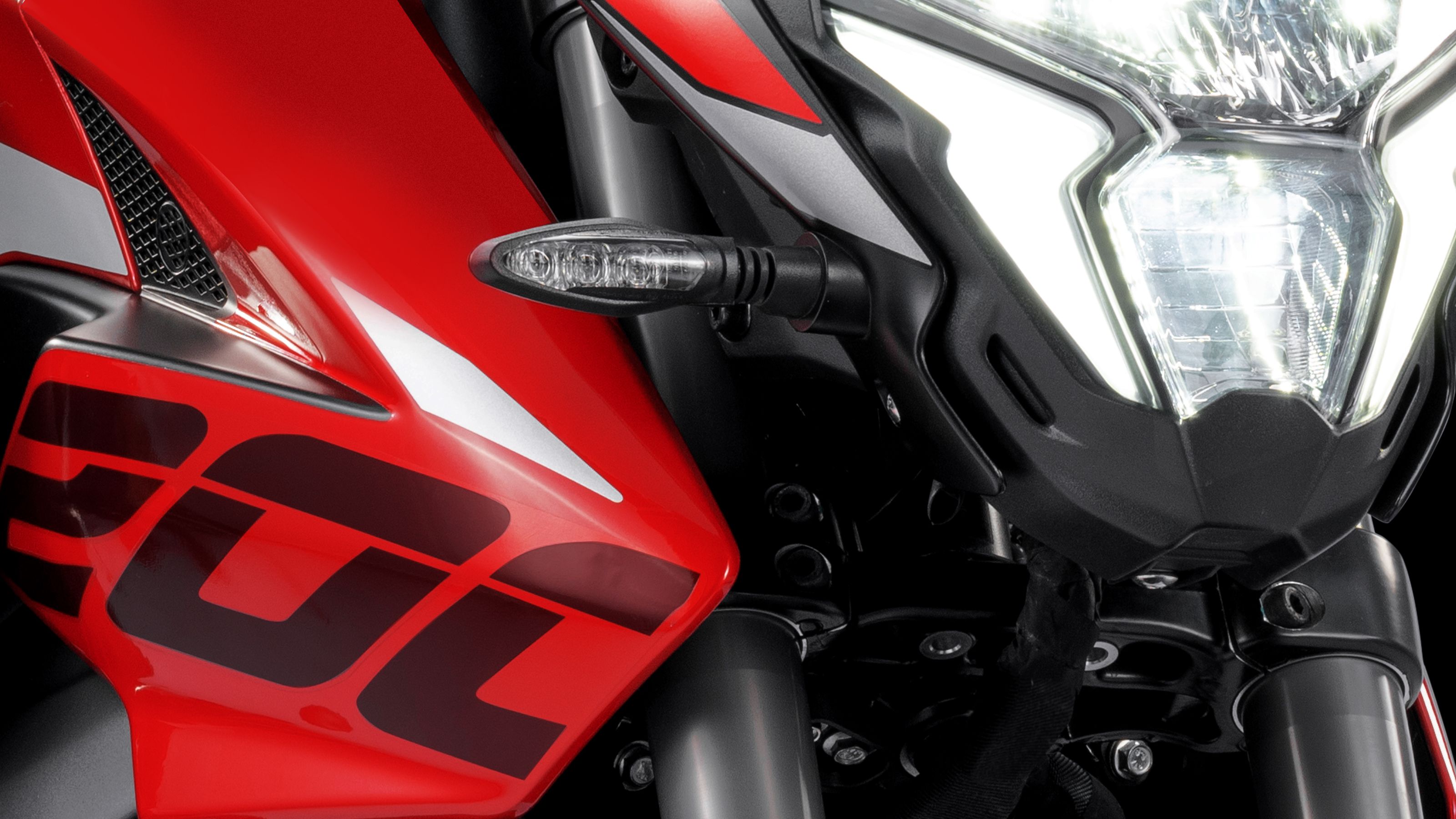
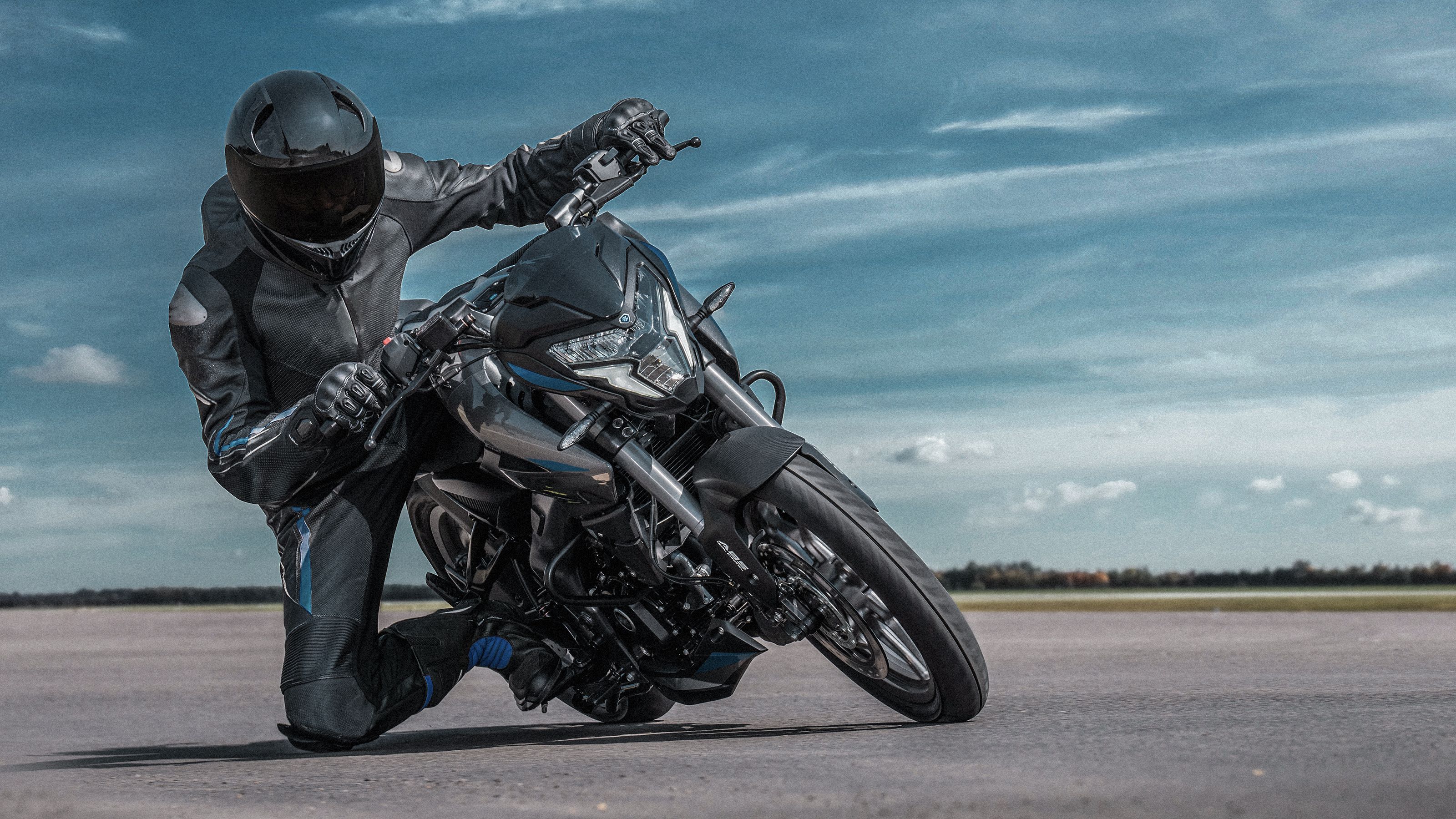
Across decades of growth, Bajaj Auto has reached more than one hundred countries. The Pulsar brand name has travelled with it, recognised in markets defined by very different rider expectations. Each region interprets the same machine differently, based on how people ride and what they look for in a machine. Different roads. Different riders. Different cultures. And through all of that change, the Pulsar has held its purpose. This is where we joined the Pulsar story, at the start of its 2025 chapter for the NS200 & NS160.

Slide

Beneath that new chapter sat a deeper challenge.

One bike can mean very different things in different regions. Sporty in one place, practical in another, tied to stunt culture somewhere else. With no shared meaning to build on, the visual language had to work across global markets that viewed the machine differently. Inside the lineup, a second challenge appeared. The Pulsar range had widened, and newer variants had begun to sit close to each other. The NS200 and NS160 needed clearer separation and a defined role within the family.

At the brand level, Bajaj was also entering a stage of global maturity. The engineering was proven and the reach was large, but the brand needed to feel more aspirational as it expanded. One system had to speak to different regions, separate sibling models, and lift the brand forward without losing what riders already recognised.

Slide

Building the anchor for the global rollout.

Designing for one audience is simple, but designing for audiences that varied from country to country needed a language that could stretch. It had to hold performance energy while giving countries the space to shape it to their own realities. Fast in one place, functional in the next, aspirational somewhere else. So we built a language that could adapt without losing intent. Flexible where it needed to be, clear where it mattered.

On a broader level, the language also needed to lift Bajaj’s presence. The engineering was already admired and the reach was already global, but the visual tone had to rise with it. This master language became the anchor for that shift and the base on which everything else was built.

Slide
Slide
Slide
Slide
Slide
Slide

The system came to life through layered elements, each designed to work in sync. Almost like a well-built engine.

Picture

Aggressive Cropping.

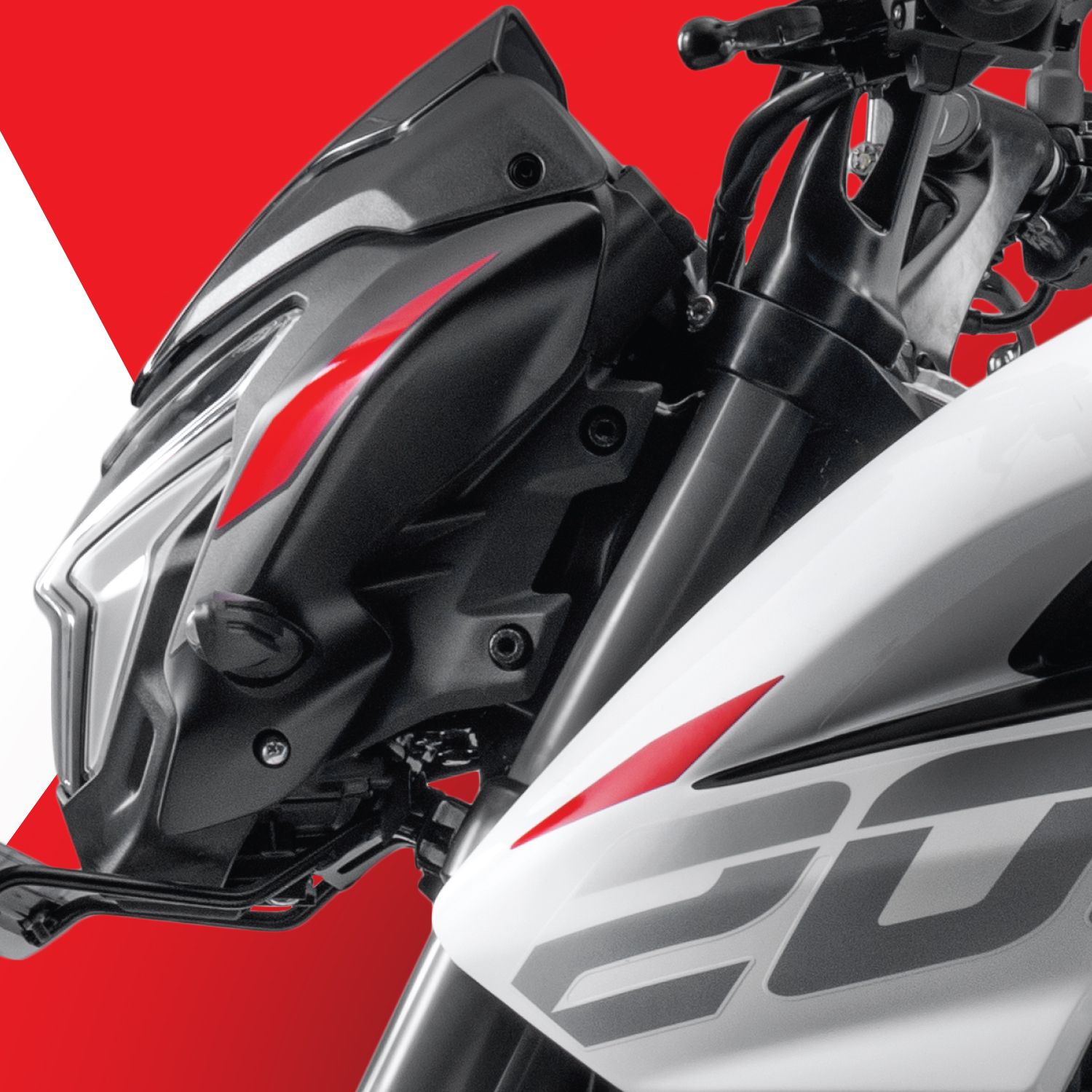
Tight, intentional crops and bold scale shifts created controlled tension across the design language.

Picture

Glide Bars.

Thin parallel bars introduced kinetic energy and directed flow throughout all communication.
Picture

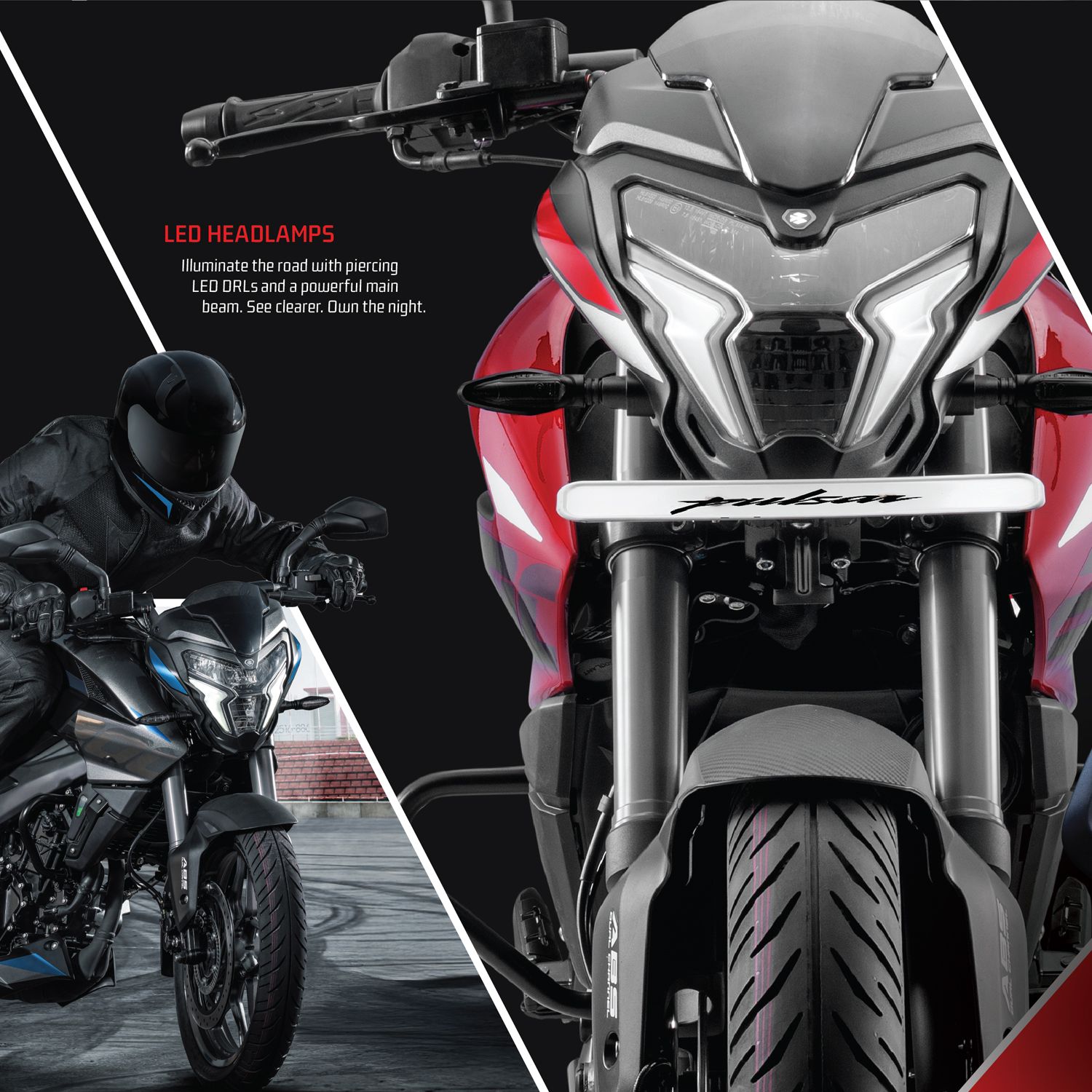
Modular Grids.

The dynamic modular grid shaped the system, with shadows and overlaps supporting layout behaviour and localisation.

Picture

No-Slant Type.

A straight, grounded type choice replaced slanted racing fonts and removed the usual clichés.
Picture

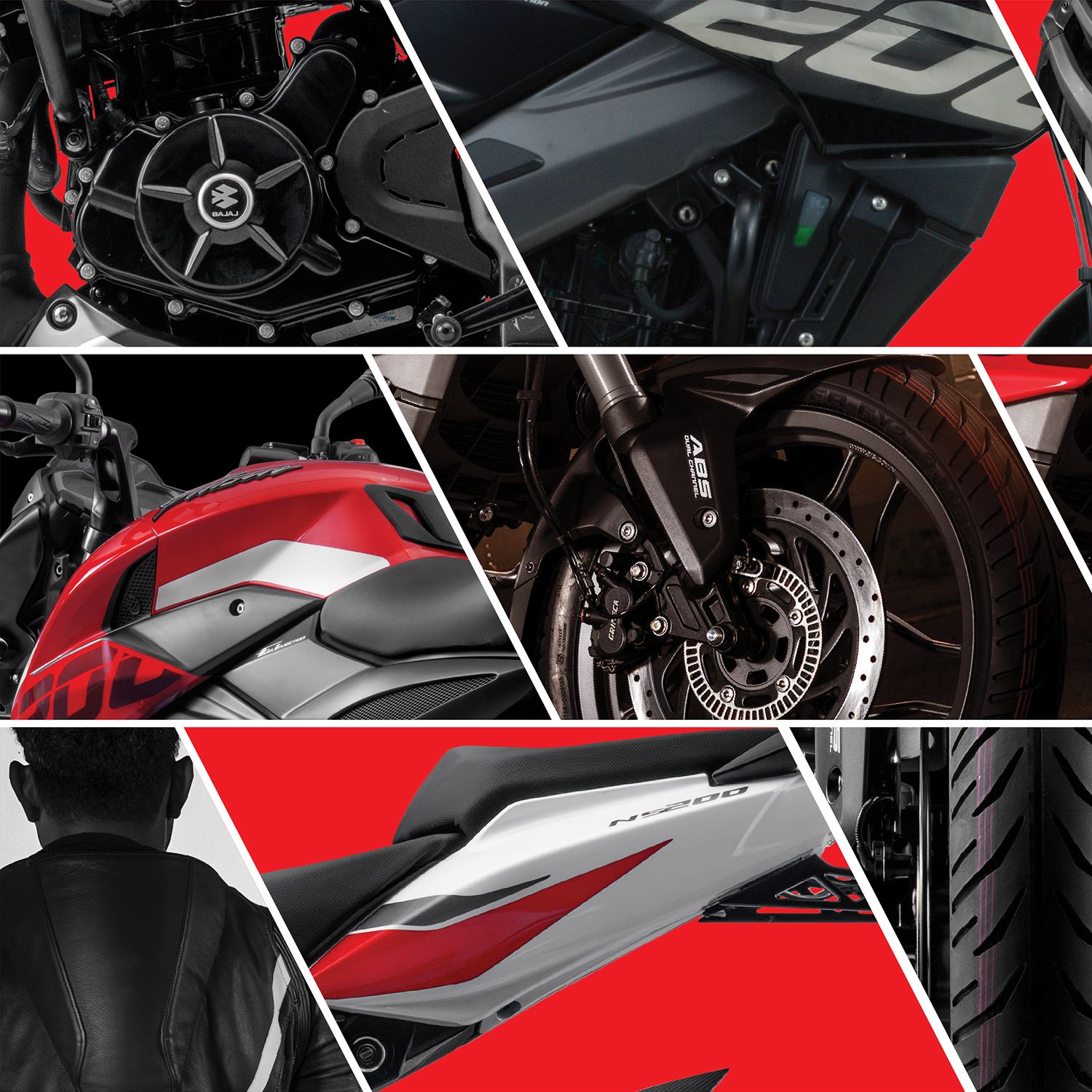
Diagonal Energy.

Geometry taken from the bike’s bodywork guided the language and defined its angular behaviour.
Picture

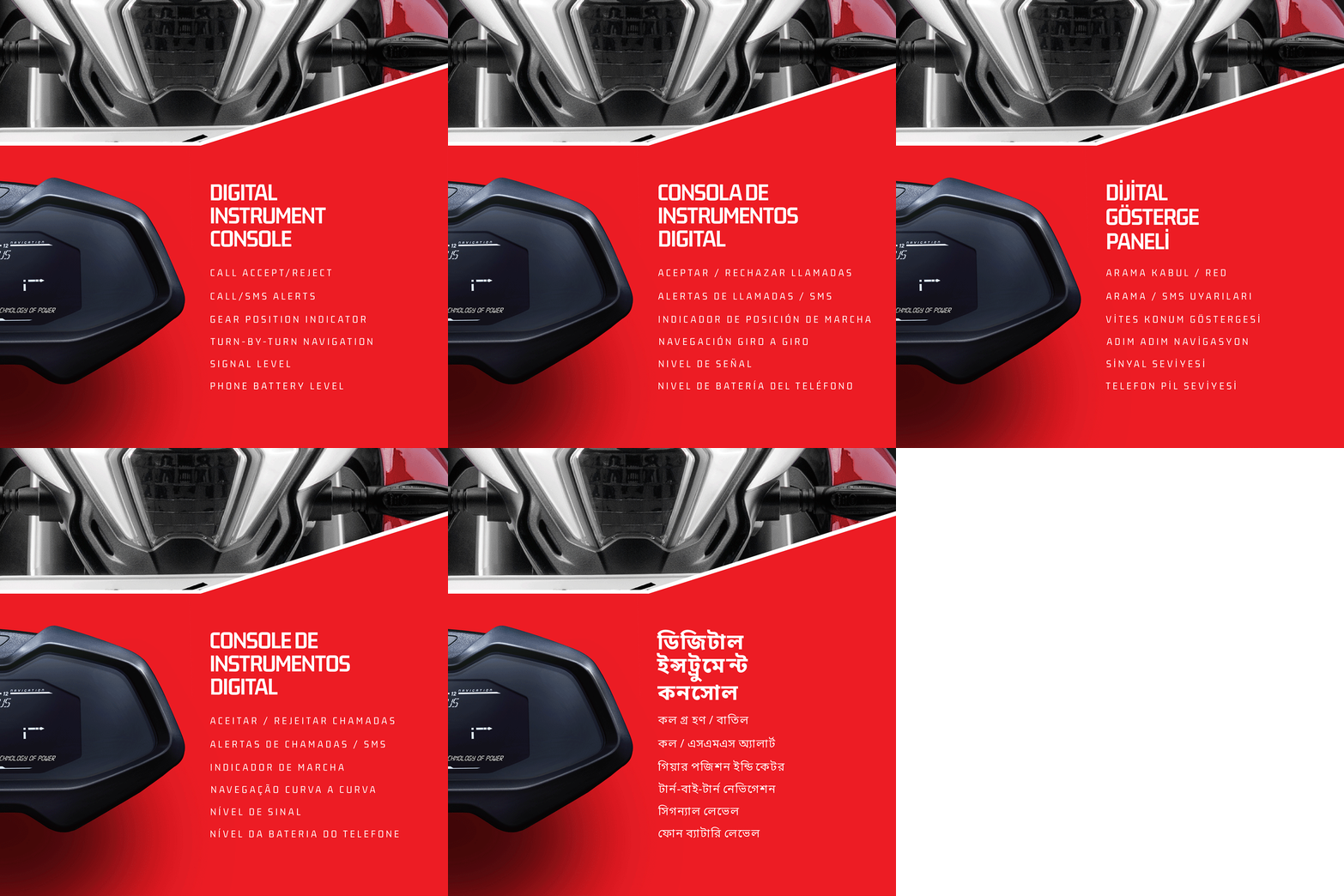
Adaptable Language Zones.

Fixed text zones made localisation simple, allowing regions to swap languages without changing the design logic.
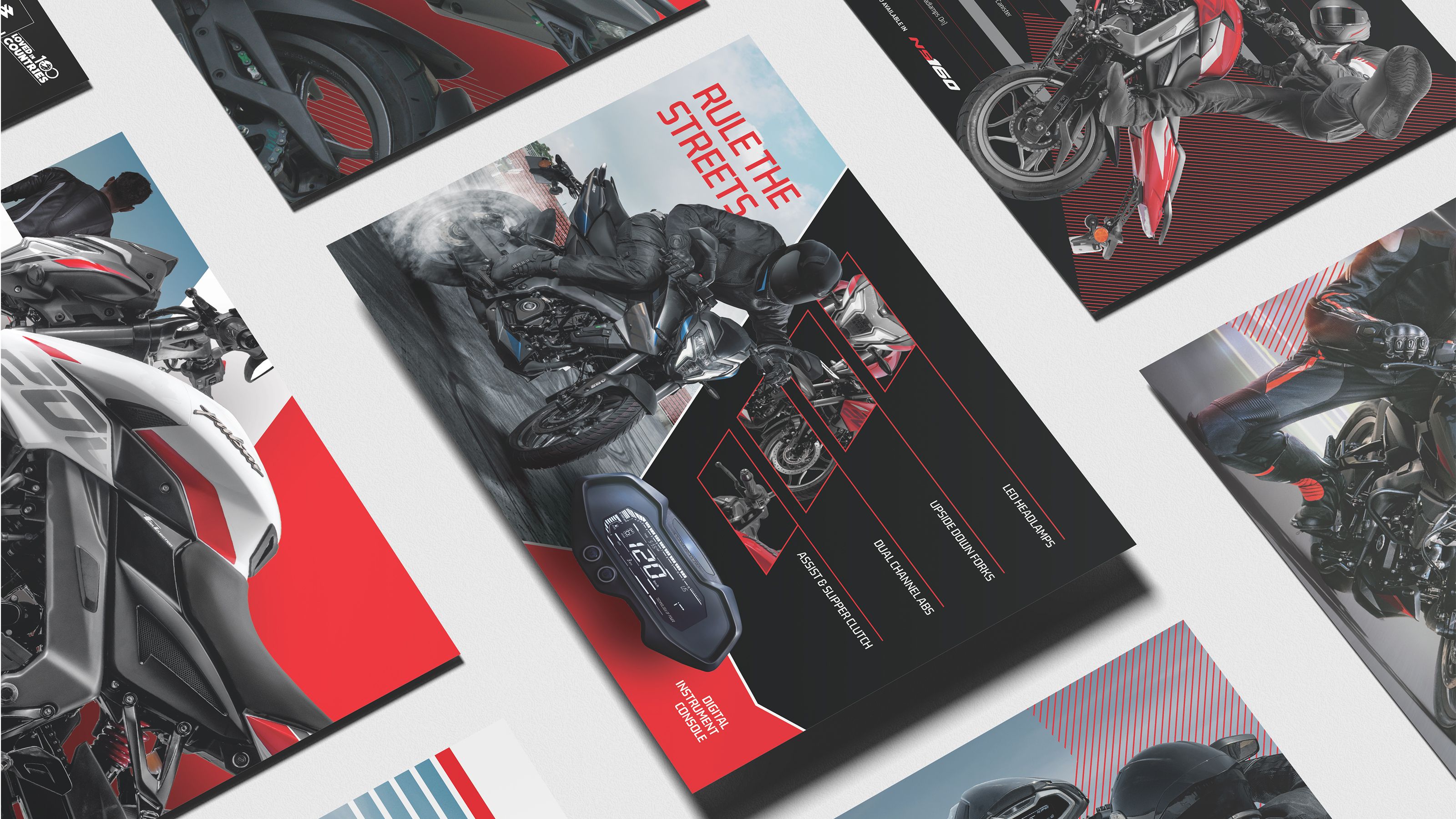
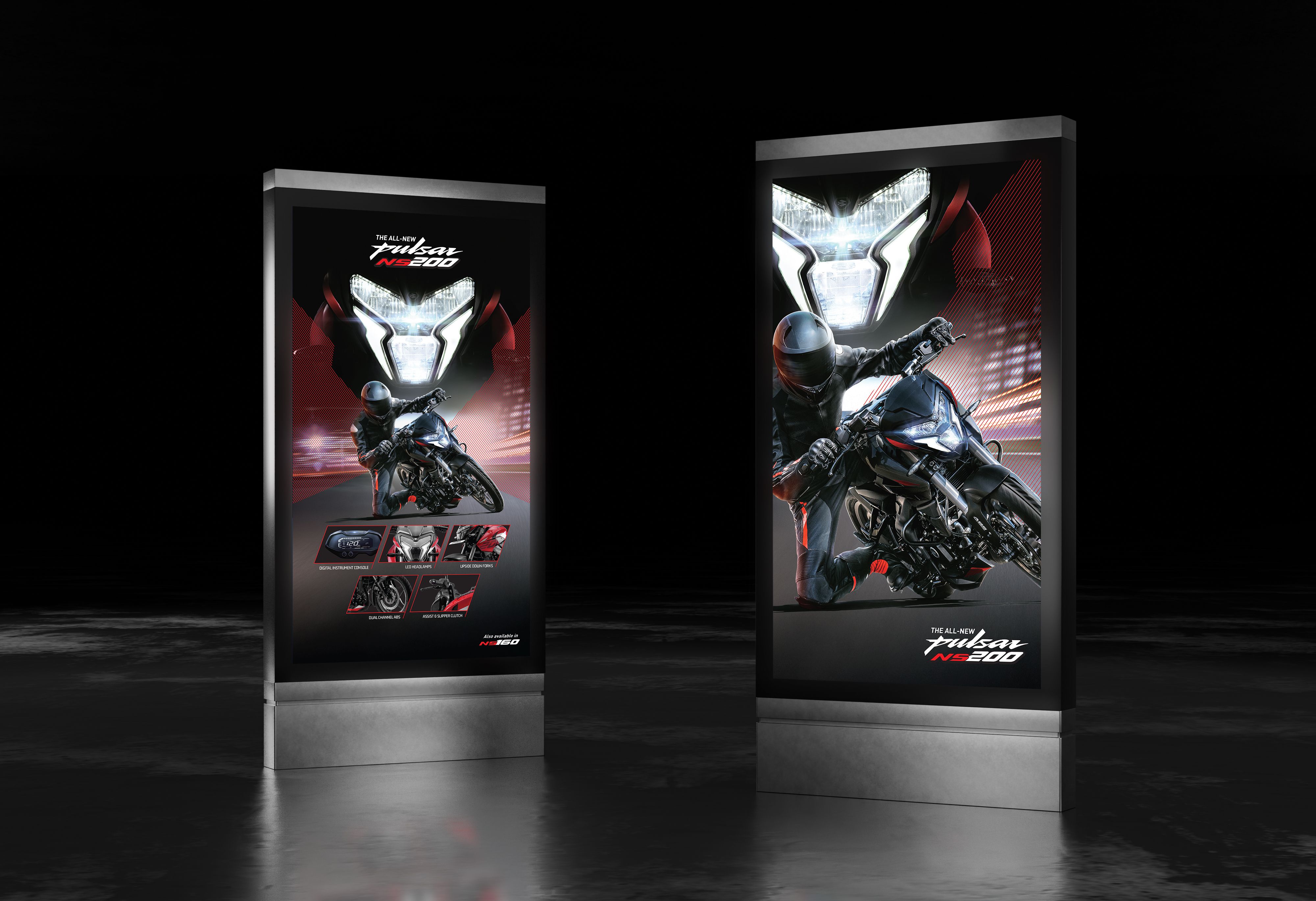
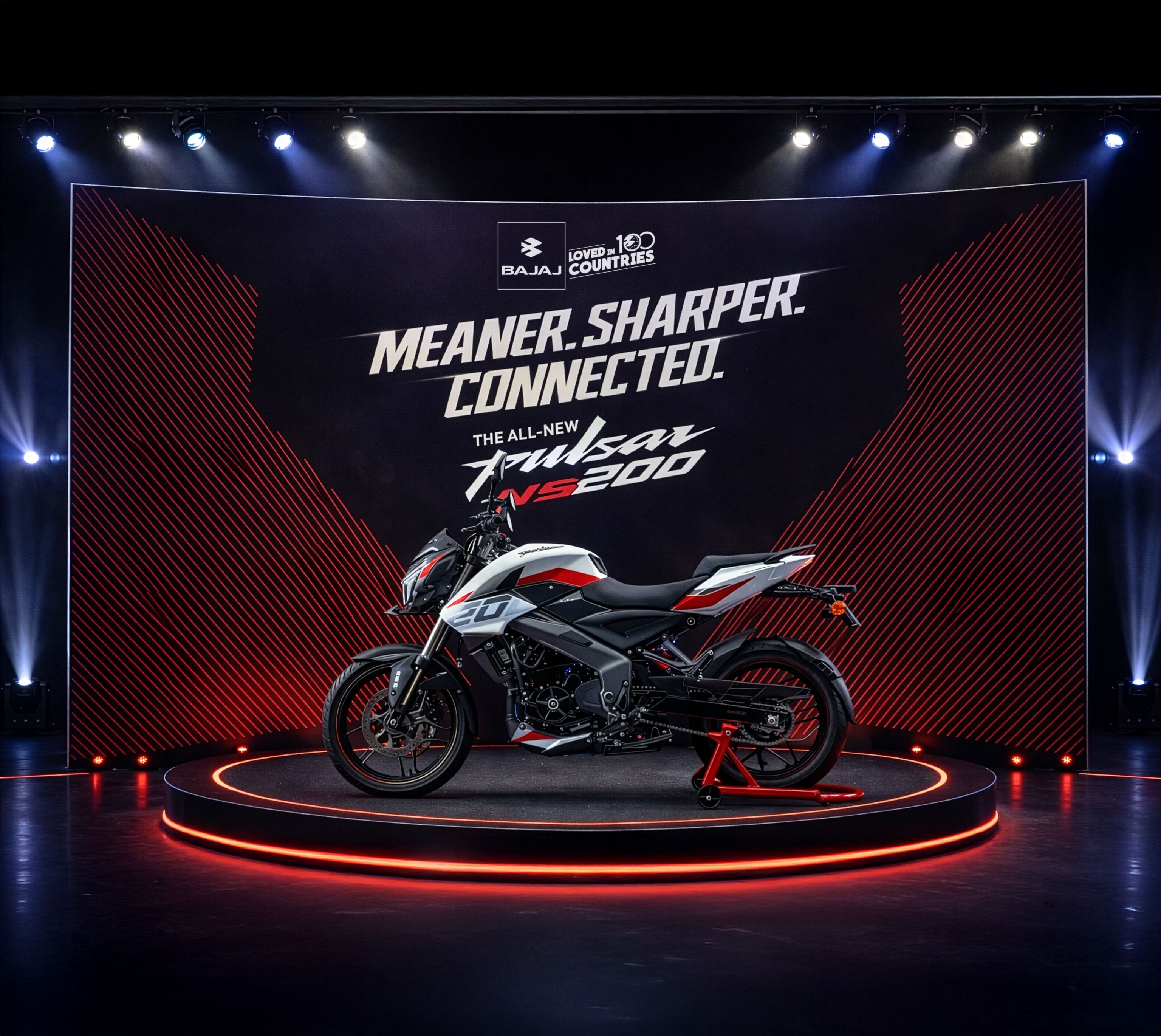
The language. Out there. Ready for the streets.

Slide
Picture
Picture
Picture

For a name with this much history behind it, space to explore is uncommon, but we got some here. Enough room to take the bike out properly, not just rev it on the stand.

The wild part is knowing this work will travel through cultures and languages,
guided by creative teams we'll probably never meet.

Designing the global design language behind Bajaj Pulsar NS200.